

Alaa Hasbini, MA
She/Her/Hers
- Licensed Clinical Psychologist
- Cognitive Behavioral Therapy
- ACT
Practices in:
Beirut: +(961) (3) 919889
Online Therapy Available
Central Line: +(961) (3) 919889
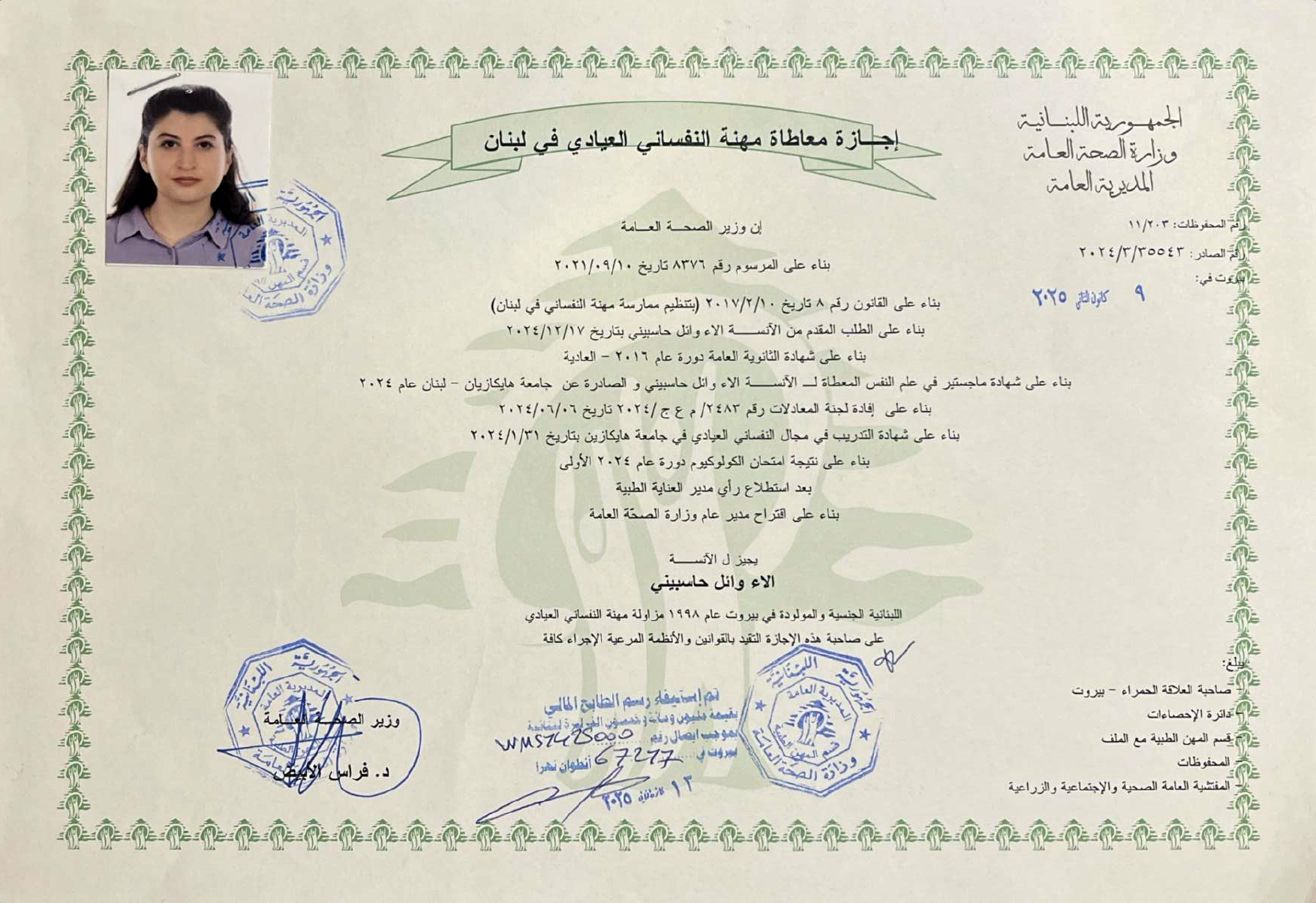
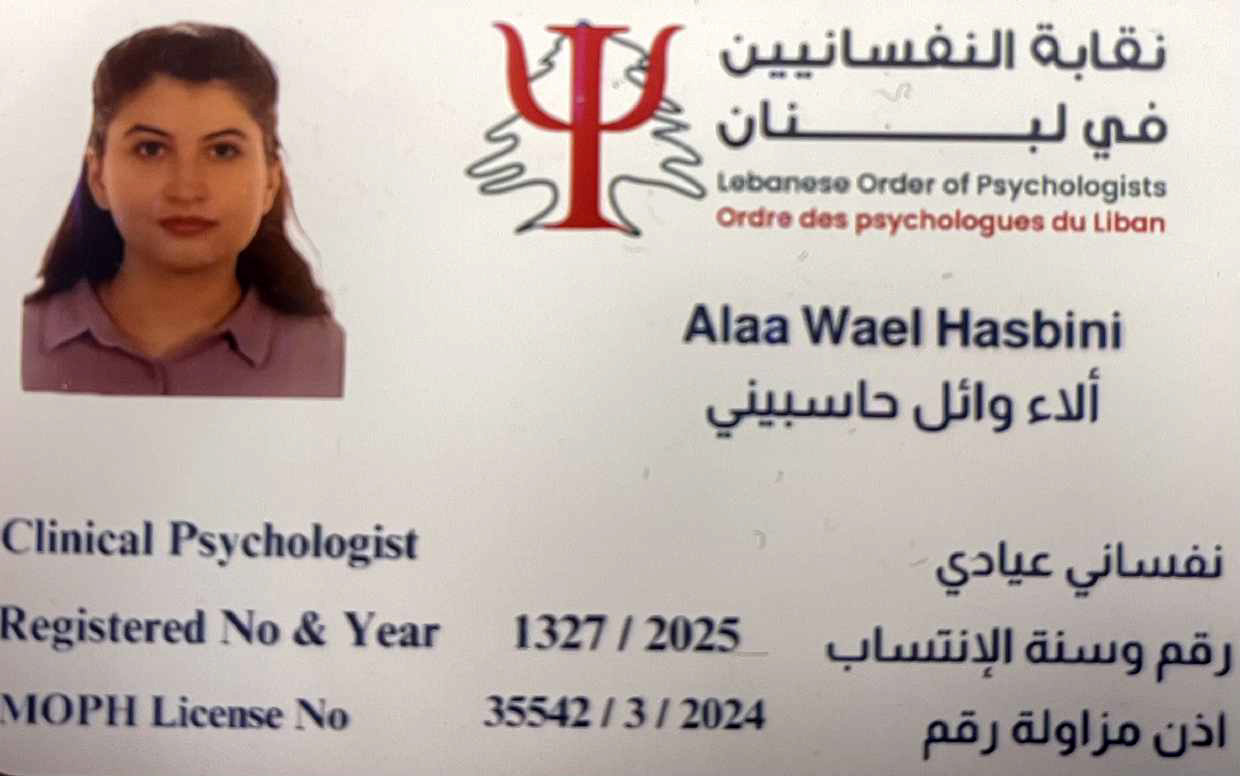
Alaa Hasbini is a Licensed Clinical Psychologist with experience across clinical, humanitarian, protection, and crisis intervention settings. She is registered at the Lebanese Order of Psychologists (LOPsy). Alaa provides psychological support for children, adolescents, adults, and older adults experiencing anxiety, depression, trauma, emotional distress, relationship difficulties, life transitions, and other mental health concerns. Her expertise includes crisis intervention, suicide prevention, child protection, and mental health support for displaced populations and humanitarian settings.
Alaa graduated with a Bachelor’s degree in psychology from the American University of Beirut (AUB) and pursued a Master degree in clinical psychology at Haigazian University. She completed her training and supervision at Embrace Mental Health Clinics.
Alaa has worked with leading organizations including Himaya, Embrace Community Mental Health Center, Unite Lebanon Youth Project (ULYP), Aseel Center, Amel Association International, the World Health Organization (WHO), and the Lebanese Ministry of Public Health.
Alaa has collaborated with the Lebanese judicial and child protection systems in cases involving abuse, neglect, and violence, contributing psychological assessments, referrals, multidisciplinary interventions, and court-related reporting. She is also a WHO Self Help+ National Trainer and has delivered trainings in psychological first aid, crisis response, and mental health awareness.
Her professional training includes Lebanon Gestalt Intensive Training (LGIT), Acceptance and Commitment Therapy (ACT), Psychological First Aid, WHO Quality Rights in Mental Health and Recovery, Gender-Based Violence and Child Protection, Mental Health Emergency Response, and trauma-informed care. Her approach integrates evidence-based, trauma-informed, and culturally responsive practices to support psychological well-being across diverse populations.
Practices In:
* Individual Psychotherapy
* Children, Adolescents, Adults, and Older Adults
* Anxiety Disorders
* Depression and Mood Disorders
* Trauma and PTSD
* Stress, Burnout, and Adjustment Difficulties
* Emotional Regulation Difficulties
* Self-Esteem and Identity Concerns
* Relationship and Interpersonal Difficulties
* Grief and Loss
* Crisis Intervention and Suicide Prevention
* Child Protection and Safeguarding – Abuse, Neglect, and Violence-Related Concerns
* Humanitarian and Displacement-Related Mental Health